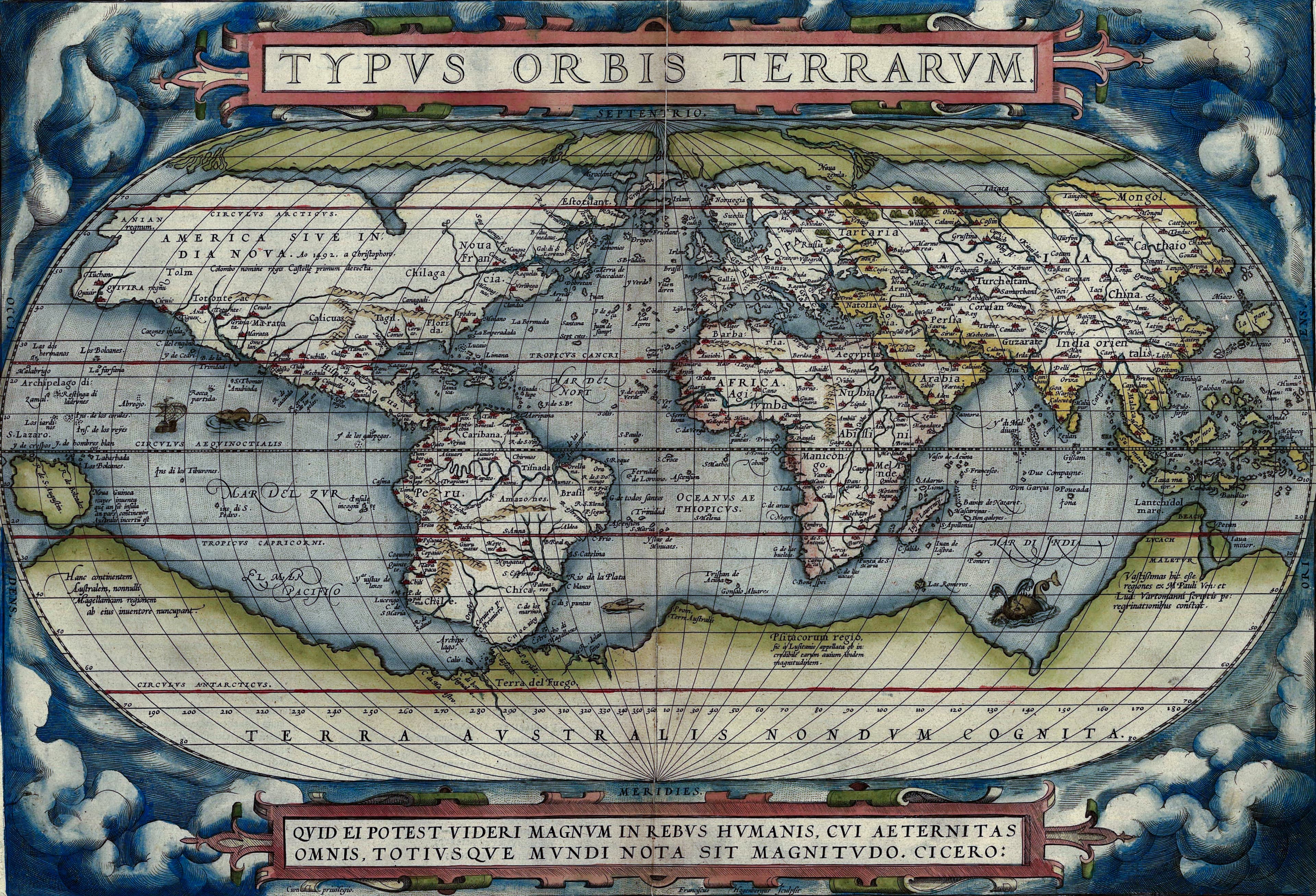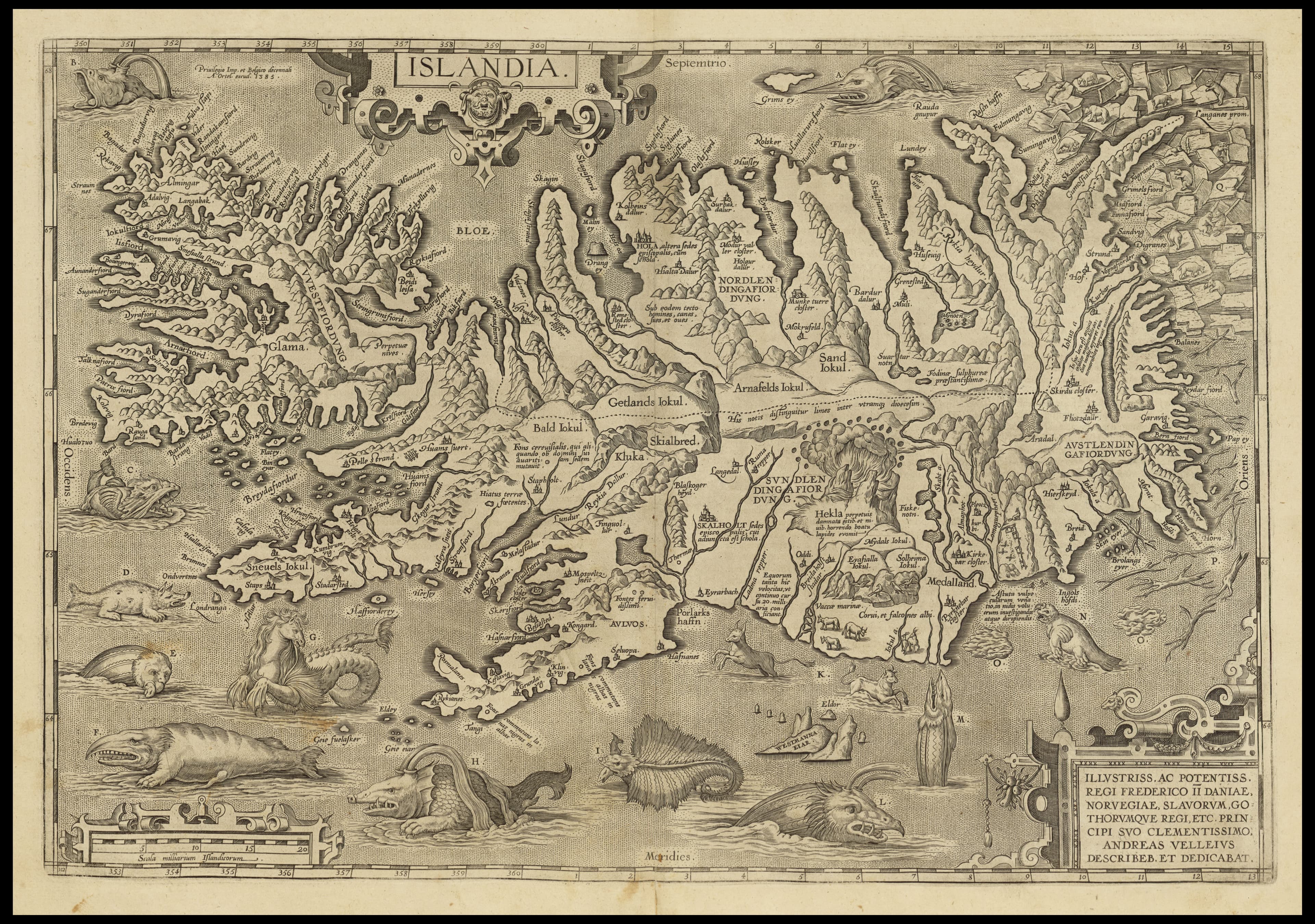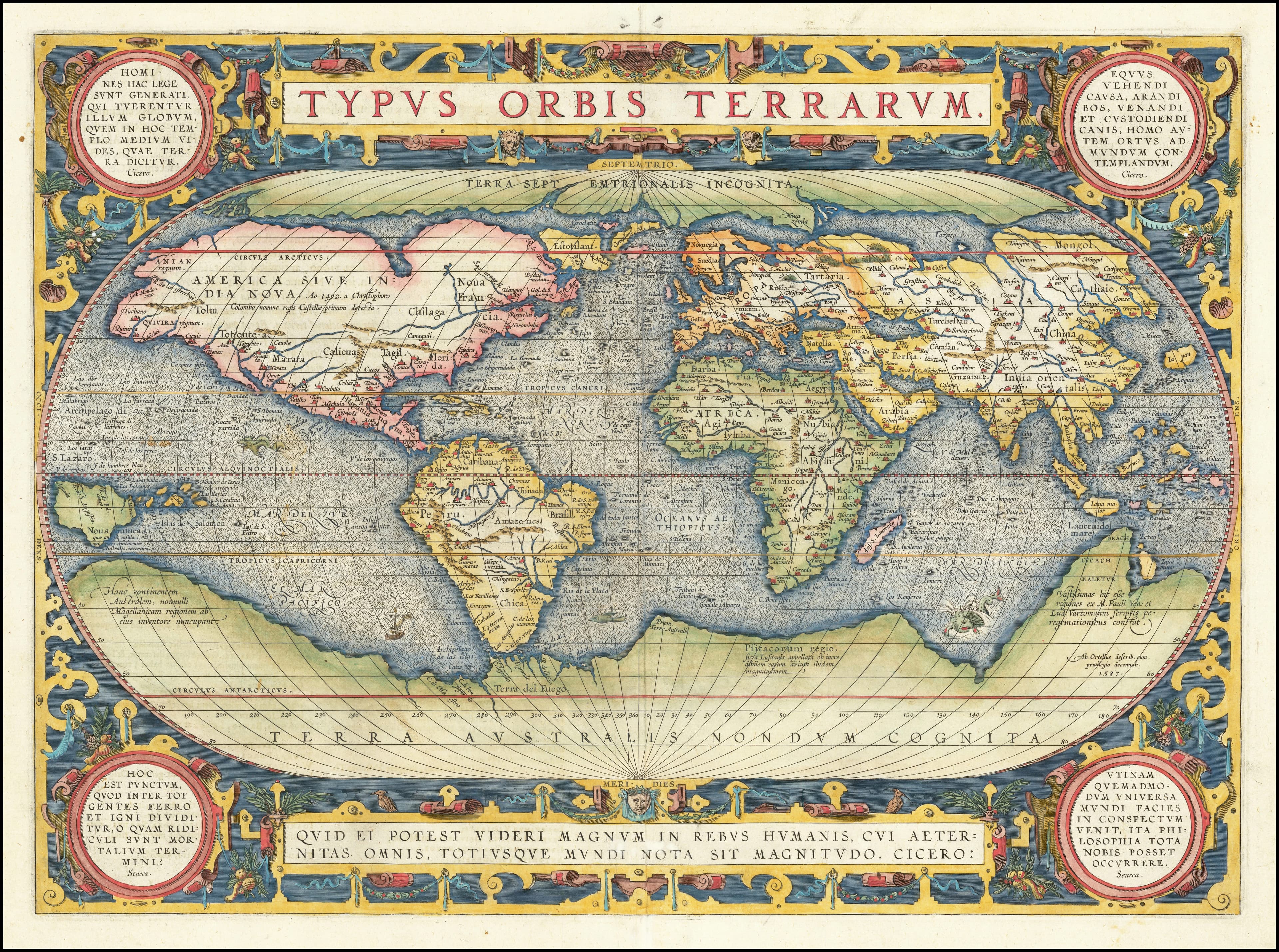
Cartographic Wonders
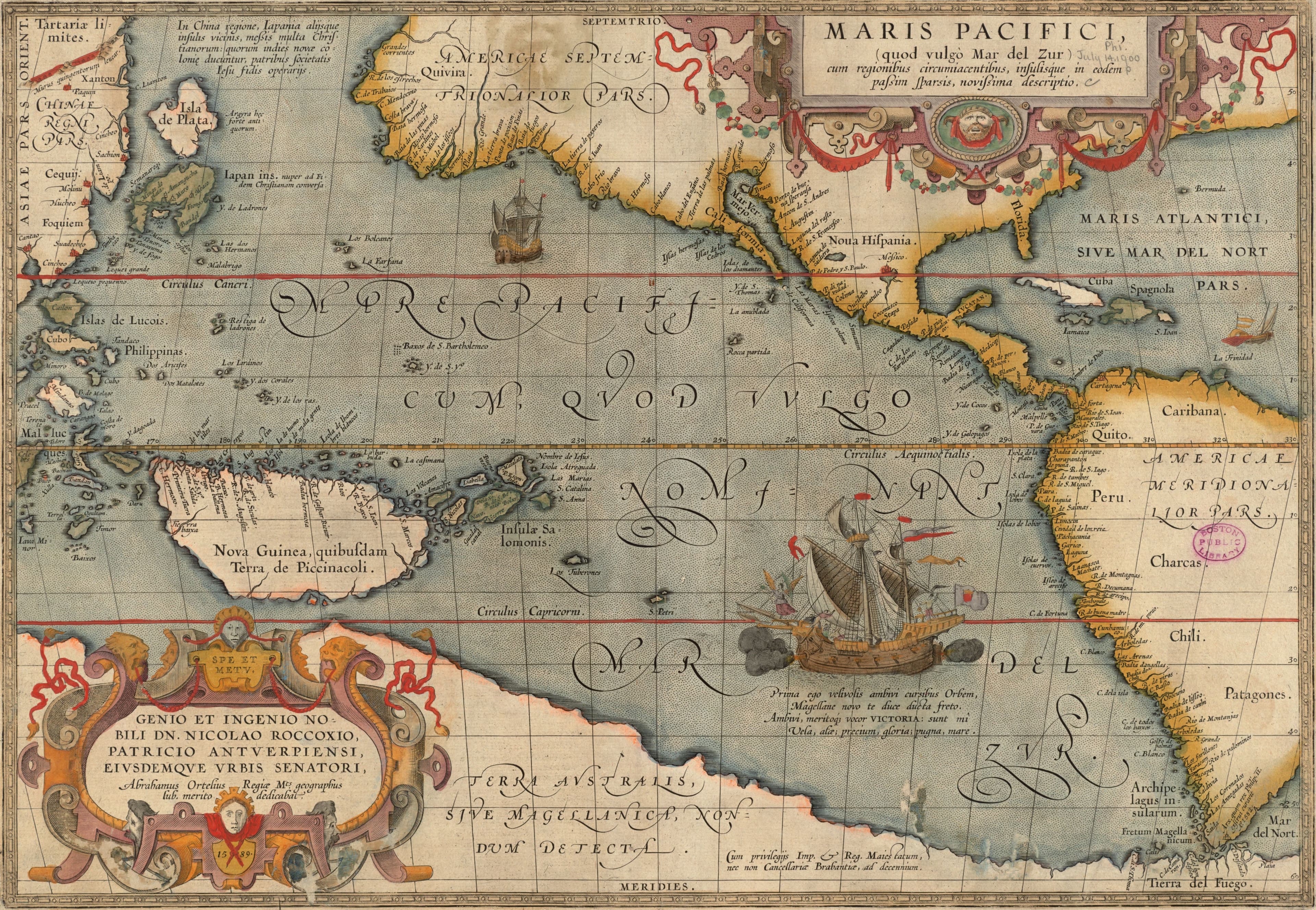
Ortelius, the Pacific Ocean
The great South Sea, given a sheet of its own.
- Map
- Maris Pacifici (quod vulgo Mar del Zur) cum regionibus circumiacentibus, insulisque in eodem passim sparsis, novissima descriptio
- Mapmaker
- Abraham Ortelius
- Date
- 1589, printed 1612
- Held by
- Norman B. Leventhal Map & Education Center, Boston Public Library · via Digital Commonwealth
Format
The full-resolution scan, color-managed to the source — yours to print, study, and explore.
Size
$29.00
The story
The Pacific, commonly called the Mar del Zur, the South Sea, here has a sheet to itself, with part of south-east Asia on one side, America on the other, and New Guinea and Terra Australis below. Abraham Ortelius signed his dedication in 1589 to Nicolaus Rockox, a patrician and senator of Antwerp, in the cartouche at the bottom left. This printing is plate 6 of the Italian edition of his atlas, the Theatro d'el orbe de la tierra, issued from the Plantin shop in Antwerp in 1612, with Italian text on the back. An ocean nobody had crossed often, drawn as if it could be known.
About this reproduction
- A faithful reproduction of a public-domain map held by Norman B. Leventhal Map & Education Center, Boston Public Library · via Digital Commonwealth — the work is centuries out of copyright.
- Printed to order on 200gsm EMA matte art paper or 400gsm canvas; framed pieces sit behind acrylic.
- Color-managed to the source scan; we correct nothing and invent nothing.
- Ships in 5–10 business days, rolled in a heavy-wall tube (framed and linen-backed pieces ship flat-packed).
- If it arrives less than perfect, we reprint or refund — your choice.
Why our maps cost more than a poster: we print from the highest-resolution scans in existence, at sizes where the engraving itself becomes visible — the sea monsters, the tiny place-names, the burin lines — on matte paper that holds every line without glare.